

Juliana Ehrenshaft
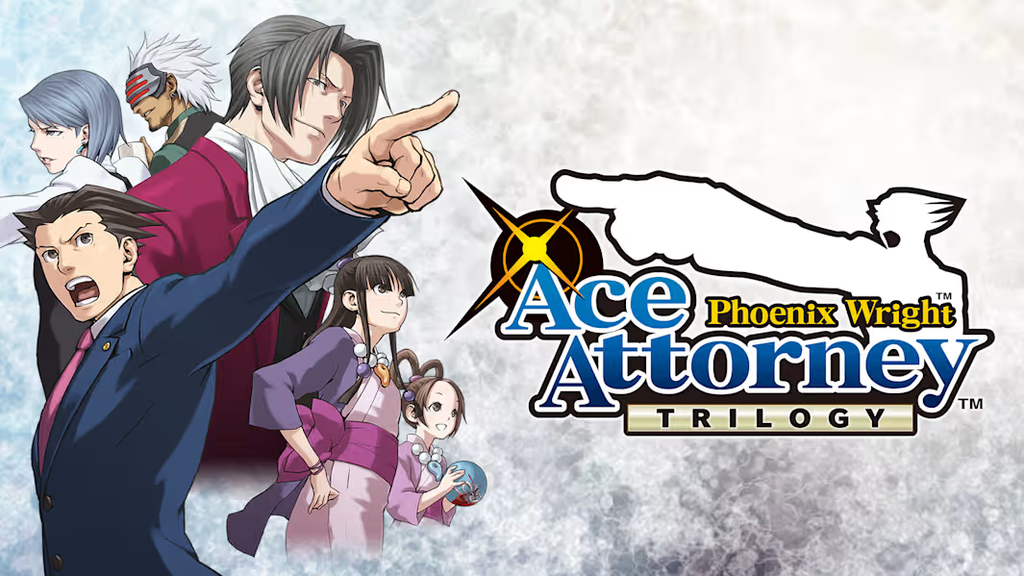
From the Nintendo game page, © Capcom Co., Ltd 2014, 2019
Can you imagine a game with murders, mafia affiliations, and political corruption all while having a witness with the pun name Frank Sahwit? Well, luckily for you, Phoenix Wright: Ace Attorney has all that and more! Phoenix Wright: Ace Attorney is a visual novel adventure game that was first developed and released by Capcom in 2001 for the Game Boy Advance, but it has since been released for more recent consoles like the Nintendo DS and Nintendo Switch.
With it being the first foray into a now six game franchise, Phoenix Wright: Ace Attorney is still regarded as one of the best games of both its franchise and the visual novel genre as a whole. In it, you play as the titular lawyer Phoenix Wright as he tries to get his clients their not guilty verdict, often unintentionally finding the real culprit along the way. While it does not fit the traditional label of a “cozy game,” I still find myself drifting back to it when I’m in times of intense stress and just need a little break. My comfort from this game stems from two main aspects: its quirky writing and its absolutely gorgeous visuals.
While the Victims May be Dead Tired, the Writing Sure Isn’t!
If there is one thing that you will immediately notice about Ace Attorney, it’s the writing style. As it is a visual novel, meaning a majority of the game is reading text, the writing of the game is very important. Ace Attorney definitely sticks the landing in this regard, as its writing stands out in two main ways: the structure of the cases themselves and the very punny naming style.
Ace Attorney cases are split up in a three day structure with each day having an investigation and a trial phase. The investigation phase usually consists of Phoenix investigating the crime scene and any rooms or places adjacent to it, aside from the first case due to it being more of a tutorial for the trials. As he goes from room to room, he meets characters such as Dick Gumshoe, who is the clumsy yet well meaning police officer that reluctantly lets Phoenix into the crime scenes, and Wendy Oldbag, an irrationally bitter and angry older woman. These fun characters show just a snippet of how whimsical and great the writing of this game can be. After all of the evidence is collected, the game transitions to the trial, which is where a majority of the game takes place. In the trial, you are face to face with the opposing prosecutor, Miles Edgeworth, or Winston Payne in the first case. Edgeworth is an unrelenting man who is known for never losing a case. In the cases against him, the clever writing is yet again displayed through the two’s banter, which alludes to a shared history between the two of them. One of my personal favourite exchanges is when Edgeworth actually tries to help Phoenix. In the third case, after seeing that Phoenix is having trouble connecting the dots, he objects and says, “I was hoping to come up with a question while I was objecting, Your Honor… I didn’t.”
The naming system of Ace Attorney is yet another example of its incredibly eloquent writing. One of the earliest examples is the aforementioned Frank Sahwit, a witness in the first case. The pun in his name comes from the phrase “saw it” because he allegedly saw the murder. Ace Attorney actually takes the joke a bit further when, after Sahwit is exposed as the actual culprit, Phoenix declares, “Proof enough for you, Mr. Sahwit? Or should I say… Mr. Did It!” Another example of this is Dick Gumshoe. Both “dick” and “gumshoe” are names detectives have been referred to in the past, making both Gumshoe’s first and last name a pun! His last name also has a double meaning since, according to Edgeworth, Gumshoe is “like gum on your shoe, he’s impossible to get rid of!” This is likely referring to the fact that he is in every case, and is yet another instance of the masterfully witty writing of this game.
The Art of Lawyering
Ace Attorney is drawn in a distinctly anime style. This is apparent as soon as you see the beautiful box art featuring Phoenix, Edgeworth, and Maya Fey. In Ace Attorney, when you enter a room with another person, a sprite of them appears. Also, at the end of a case, a piece of artwork appears, signifying the end of that case. Because of just how much art needed to be drawn for this game, you might assume that some designs or artwork had less effort put in than others, but you would be wrong! All sprites, designs, and artworks have the same amount of intense thought put in them. This is evident from the game’s distinctive character designs and also the downright gorgeous artwork and cutscenes.
The character designs of Ace Attorney have all been well thought out and are extremely detailed. For instance, the titular Phoenix Wright’s design took much contemplation from the creator, Tatsurō Iwamoto. According Iwamoto as quoted in The Art of Phoenix Wright: Ace Attorney, an art book published in 2010 by CAPCOM, Phoenix’s iconic spikey hair was a deliberate choice made in order to make him stand out and showcase his later confidence. This level of detail continues on with Phoenix’s rival, Edgeworth. For Edgeworth, his iconic cravat was initially made to make his silhouette more interesting, but it also displays his wealthy upbringing and overall posh attitude, once again showing the sheer amount of thought that went into the character designs of Ace Attorney.
Furthermore, the artworks and cutscenes in Ace Attorney are also expertly crafted. For instance, the first case starts off with a cutscene, showing Frank Sahwit committing the dastardly murder for which Phoenix will defend Larry Butz. This cutscene not only shows just how expressive the art can be through Sahwit’s unhinged expressions, but the shading also shows a surprising amount of detail for a Game Boy Advance game. One amazing piece of artwork is the one shown at the beginning and end of the case. In the beginning, when Phoenix enters his office, he sees Mia Fey lying dead on the floor of the office, her sister Maya Fey crying over her. Even in the Game Boy Advance version, this artwork perfectly exemplifies Maya’s fear and grief upon seeing her own sister dead and thinking it to be her fault. The artwork at the end, however, has the opposite tone. At the end of the case, Phoenix finds Maya innocent of the murder and promises to be there for her in place of her sister. As they shake hands, we can see Mia’s ghost put her hands on top as she gently smiles at Phoenix, who looks shocked to see her. This emotional moment just feels so warm in the art; you can really tell how proud Mia is of Phoenix, and it’s the little moments like this that really add to the overall experience of Ace Attorney and make it an extremely cozy game for me.
My Final Verdict
In conclusion, Ace Attorney is one of my personal choices for a cozy game that I would definitely recommend this fall. Not only is the writing incredibly clever, but the art too will absolutely take your breath away with how expressive it is. The format of the days and the trials leads to many fun character moments, and the numerous character pun names ensure that there is never a dull moment! The intricate character designs also help with that, and the various artworks and cutscenes featured in the game wrap it up in a nice little bow, making every playthrough an absolute joy to experience. I simply could not recommend it enough as a cozy game to play this fall!