

Luna Fargueson
From the Mirror’s Edge Archive, © Electronic Arts
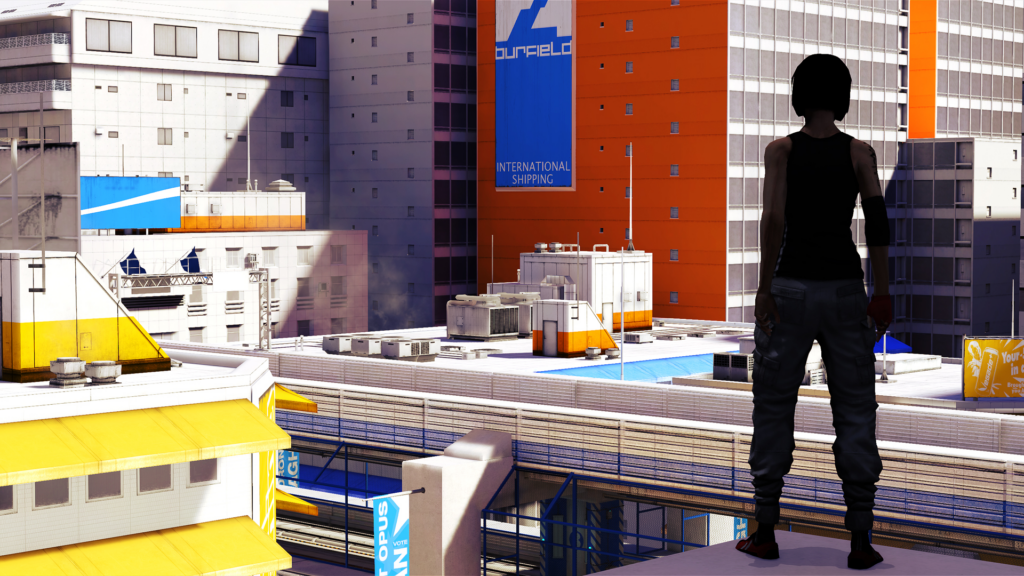
If you asked someone what the most iconic part of Mirror’s Edge is, they’d probably say the visuals. Despite releasing in 2008, the cult classic game looks like it hasn’t aged a day thanks to its distinctive and timeless art direction. While most other games of the era are now infamous for their heavy bloom and aptly-named “piss filter” (not even Mario Kart Wii was safe, the poor bastard), Mirror’s Edge went for a distinctly bright and colorful urban aesthetic. Personally, I’ve always been enamored with cities, and I would cite Mirror’s Edge as a thesis statement on why I adore them so much.
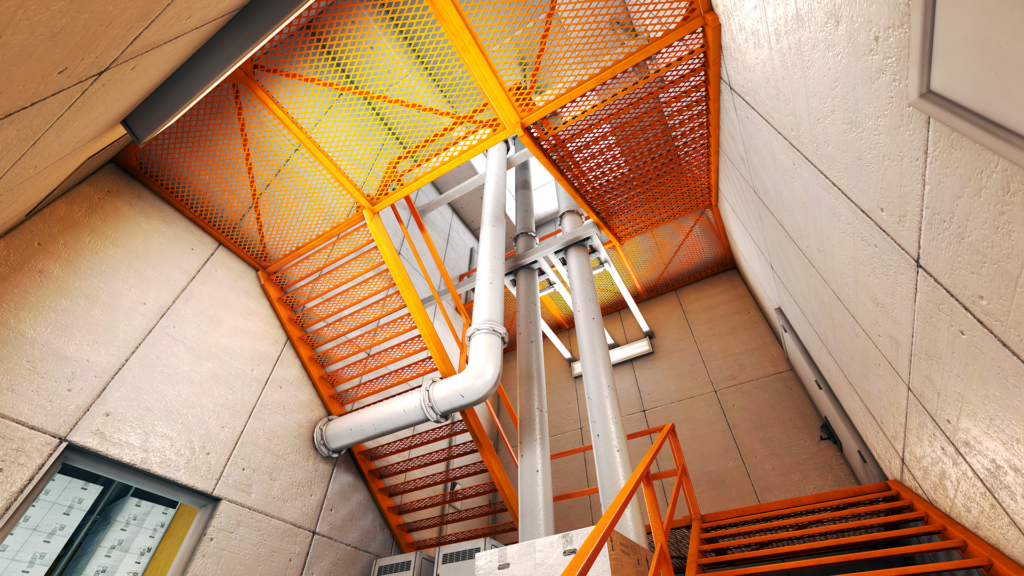
While the exterior of the city is flashy, what with its vibrant blue sky and looming skyscrapers, I most appreciate the depiction of the silent, industrial tunnels that run throughout buildings that make up the greater infrastructure keeping the urban sprawl together. If the game were released today within our current Internet-influenced zeitgeist of slang, you would see a lot of people praising the game as “liminal,” given its serene, empty environments that feel both uncanny and comforting. I think that it handles textbook liminal spaces (transitional spaces in between two locations) masterfully, and by extension accurately captures the feeling behind the modern Internet definition as well.
In between bouts of heart-pounding parkour and being shot at by an unreasonable amount of police officers, there are moments where you are guided to retreat into the quiet, unseen parts of the city; taking refuge in hallways and rooms only ever traversed by invisible maintenance workers and janitors, soundtracked by a pause in the pounding breakbeats to make room for ambient pads and the hum of fluorescent lights. Behind their walls and doors, you can hear the bustling of the city outside and TV broadcasts being played in adjacent, inaccessible rooms. These segments of respite from the intense gameplay are, to me, beautiful. I always take a moment to admire these environments and reflect on what they mean for the urban environment as a whole. It’s not the first thing you think of when you think of the city, but behind-the-scenes places like these are what keep its concrete heart beating. The collective work of thousands of infrastructure workers allows a city to exist, and Mirror’s Edge lets you take in those liminal spaces that these unsung heroes reside in, utilizing them as a moment to take a breath from the intensity.
From the Mirror’s Edge Archive, © Electronic Arts
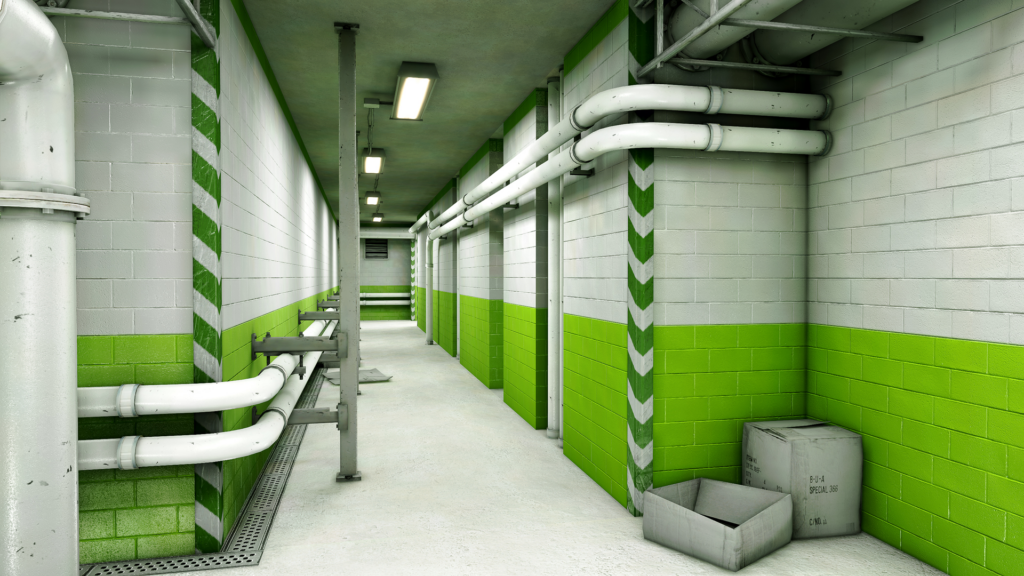
The mix of emotions that you feel as you enter these spaces fascinates me. In the textbook definition of a liminal space, these are the areas that guide you between major points of interest in the game. You’ll usually end up barely escaping gunfire and taking a moment to relax in these, still tensing up knowing that another intense sprint is just up ahead. Even though it’s obviously a video game, Mirror’s Edge does an incredible job of making this world feel real; these spaces are designed as a loading point between two locations and the Pirandello-Kruger officers definitely aren’t programmed to chase you into this place from the previous location… But what if they do? There’s always a feeling of tension knowing that the people after you are out there in that city, and that even the moments of relaxation here won’t keep you safe forever. These sterile and quiet places juxtapose heavily with the aggressive and loud city outside, and contribute greatly to the player immersion on a psychological level. It’s the little things like this that make the game’s city feel like a living world, and I commend the developers for putting in the effort to represent these generally unseen places in a way that complements the overall experience.
From the Mirror’s Edge Archive, © Electronic Arts
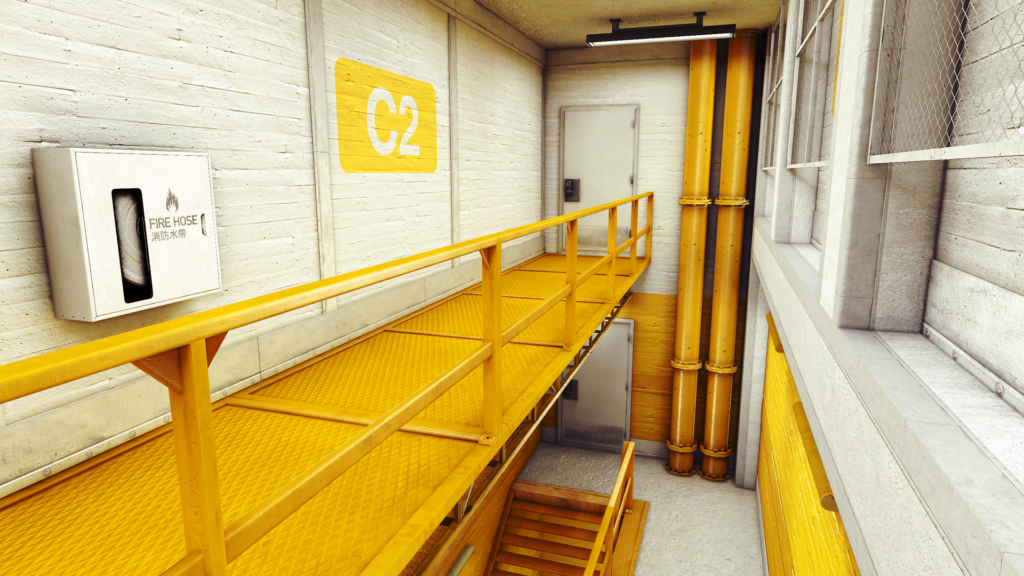
It’s that same mix of emotions that puts these moments more in line with the contemporary use of the term “liminal space,” that being simultaneously comforting and eerie environments. To my point, one of my favorite bits of ludonarrative cohesion in the game is how weak and fragile you feel. While the protagonist Faith is great at parkour and it feels amazing to do, combat sort of… sucks. It’s a little janky, you die fast, and you barely stand a chance given that you’re an unarmed individual going against a team of professional, armored security officers with military-grade guns. A lot of people have complaints with the combat system, judging by the fact that the mediocre (don’t @ me) 2016 sequel Mirror’s Edge Catalyst heavily simplified and trivialized it. I believe that the unintuitive combat serves in favor of the game, frankly—it only contributes to the rollercoaster of intensity and emotions that the game brings you through. These unfeeling spaces aren’t designed for you to stay in them, and you’re only borrowing them for a brief moment before putting yourself in danger again. In that way, these urban liminal spaces especially immerse you in that feeling of simultaneous tension and relaxation, a feeling that falls in line with the popular definition of the “liminal space” term more than any other game I’ve played.
From the Mirror’s Edge Archive, © Electronic Arts
I think that Mirror’s Edge is an absolute must-play, particularly in our day and age of nostalgic and postmodern aesthetic sensibilities—sensibilities most interestingly reflected in the recent obsession with “liminal spaces.” Hell, even beyond that, it’s relevant on a political level—the final chapter of the game features you shooting up a data center being utilized to collect personal data on the city’s populace. But, ultimately, what fascinates me the most about it is that its developers seemed to be keenly aware of the emotions that these oft-overlooked urban liminal spaces can evoke in people long before the concept of the “liminal space” became popular on the Internet. While the platonic ideal of a city often calls to mind bright skyscrapers and looming megacorporations, the real lifeblood of the urban organism runs through these silent, industrial hallways only traveled by those who quietly put in the work to keep our modern world running.