

Grace Rook
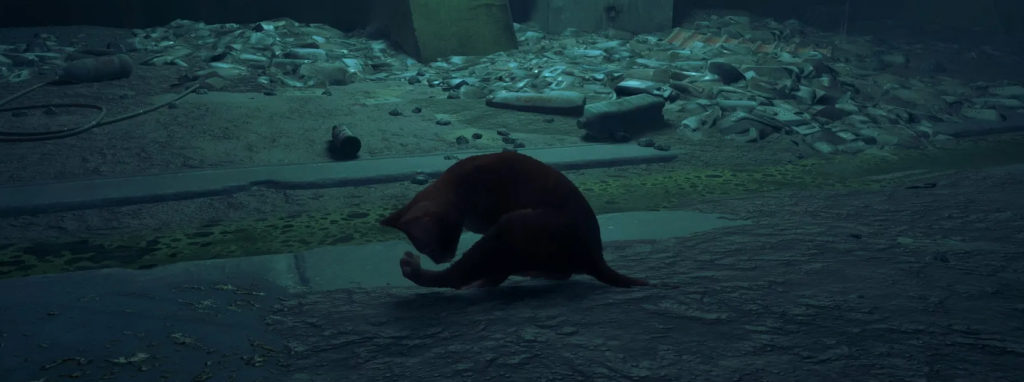
From IGN “Chapter 2 – Dead City” walkthrough, © 2023 BlueTwelve Studio Ltd, published by Annapurna Interactive
While liminal spaces have proven to be ample fodder for video games, the game Stray introduces a lim-mew-nal space—one where a cat explores a strange, inhuman underground world. This abandoned environment, explored by an orange cat, draws on uniquely human touchstones for its eerie elements.
Stray is a single-player adventure game set in a dystopian future where robots populate a city devoid of human life. Dead City is an uninhabited ghost town in Chapter 2 of the game, and is one of the first environments that the player encounters. This environment is unique in that it does not contain any robots, whereas other environments are full of robot life. Dead City has liminal qualities including the absence of other living beings and a sense of abandonment, both of which evoke an existential dread in the player.
The first source of dread that the Dead City environment draws on is itself environmental. The city has no humans, but it also has no plants or animals, with the exception of the Zurks; enemies evolved from bacteria. The game’s cat avatar invites the player to feel sympathy across species, as they experience animal isolation in addition to human isolation due to the dearth of all kinds of life. The emptiness of the area simulates extinction and conjures a feeling of dread around species extinction that centers animal experience, not just human consequences.
The urban, industrial environment ties the sense of extinction and abandonment to human destruction of natural landscapes. While later environments use engaging and vibrant color palettes, the Dead City is made up almost entirely of neutral tones, which emphasizes the absence of green space and plant life. Simply put, this level is ugly, and introduces an ugly vision of industrial life to the player before the game’s art flourishes. The visual connection of barrenness and ugliness situates human dominance over nature as a loss, not an accomplishment.
The absence of robots in this level draws on another human existential fear of technology outlasting the human race. Sentient robots aside, the urban environment remains standing long after humans have left the city, leaving human detritus instead of a legacy of innovation. The absence of robots removes any sense of technological achievement from this environment, calling into question what lasting contributions the human race ultimately makes. The Dead City makes the frightening claim that human existence is not only finite, but meaningless and destructive.
Stray is a living game, full of robots, brilliant neon signs, and innovative gameplay advantaged by a small and nimble cat avatar. The Dead City stands in sharp contrast to the design choices made throughout the rest of the game. This level still sets a tone for the dazzling industrial lights of the rest of the game by introducing the underground world through a lifeless environment. The empty and unused alleyways of Dead City invite the player to consider not only what lurks in the shadows, but what lurks in the increasingly industrial future.